 Skip-the-line available
 The Best Time to Visit the Egyptian Museum in Cairo
When to go to the historic Tahrir Square museum — the quietest hours, the coolest months, Ramadan hours and how to plan around Cairo's heat and crowds.
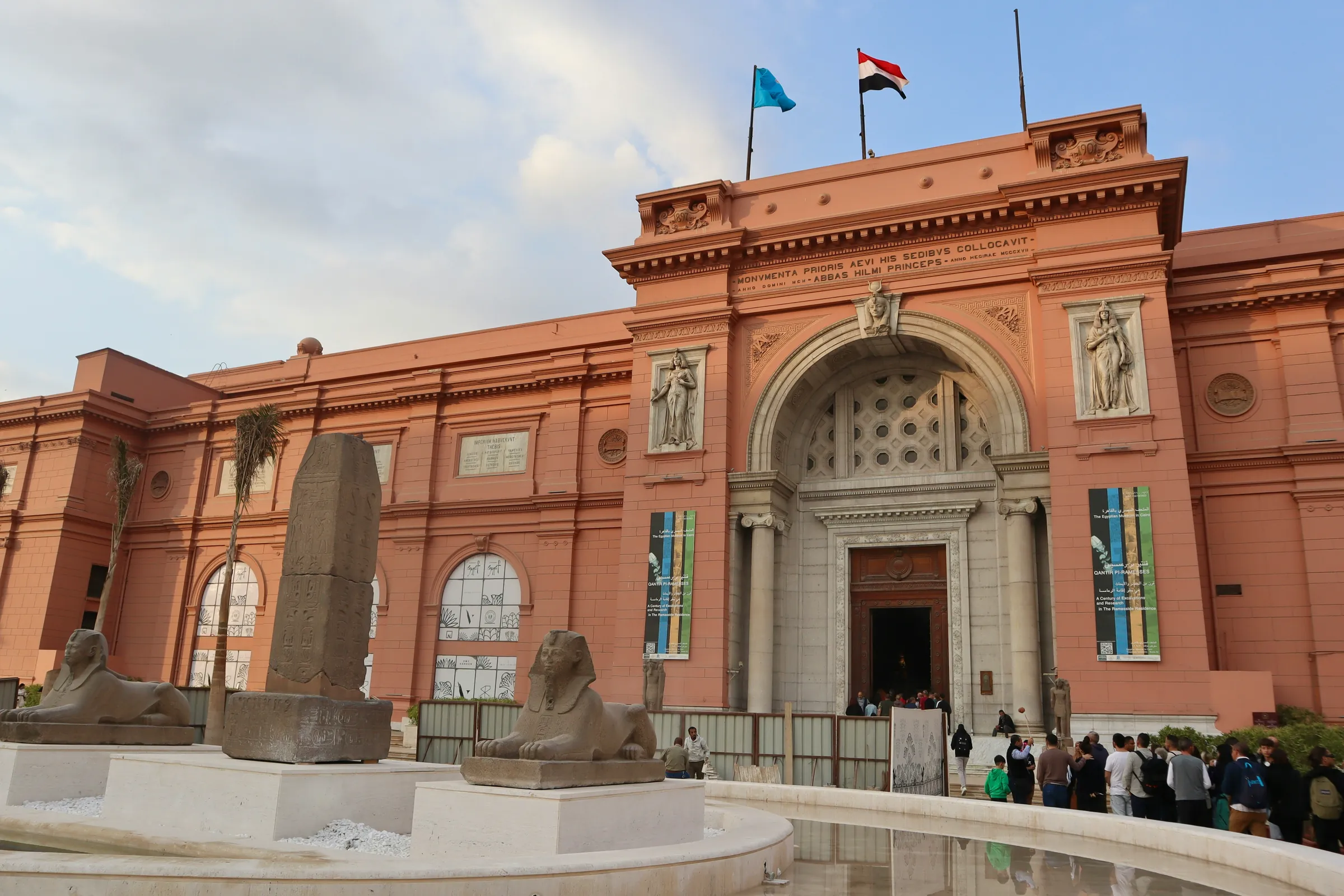
The historic Egyptian Museum on Tahrir Square in downtown Cairo — opened in 1902, and distinct from the Grand Egyptian Museum out at Giza — rewards good timing. Its galleries fill with downtown coach groups in the late morning, while Cairo's climate makes the cooler months of roughly October to April far more comfortable for pairing the museum with open-air sights. Because the standard ticket is open-dated, you choose your own day and walk straight in past the ticket-office queue. This guide covers the quietest hours of the day, the best months to come, how Ramadan and public holidays shift the hours, and how to build a Cairo itinerary around the heat.
What are the quietest hours to visit the Egyptian Museum?
The quietest hours at the Egyptian Museum are the first hour after it opens in the morning and the last couple of hours before it closes in the late afternoon. The building is busiest in the late morning, roughly from mid-morning until early afternoon, when organised tours and coach groups from downtown hotels converge on the most popular galleries. Because the standard ticket is open admission with no fixed time slot, you can simply arrive when it suits you and walk straight in past the ticket-office queue. Our concierge recommendation is to be at the doors close to opening, head for the headline treasures first, and keep the crowded middle of the day for the quieter side galleries. The museum on Tahrir Square is open every day of the year, so the hour you arrive matters far more than the day of the week you choose.
A late-afternoon arrival is the other reliably calm window at the Egyptian Museum, as the morning coach parties thin out well before closing time. The museum keeps daytime hours, opening in the morning and closing in the late afternoon, with last entry a short while before the doors shut, so a visit that begins two or three hours before close still leaves ample time for the highlights. If your schedule is flexible, an early start frees the afternoon for the Giza pyramids or downtown Cairo, while a late start lets you spend the hot midday hours in the air-conditioned galleries. Whichever window you pick, allow at least two to three hours inside: the collection on Tahrir Square runs to well over 100,000 objects across two floors, far more than anyone can absorb in a single visit.
What is the best month to visit the Egyptian Museum?
The best months to visit Cairo, and therefore the Egyptian Museum, are the cooler ones from roughly October to April, when the city is comfortable for combining the indoor galleries with open-air sights. Cairo has a hot desert climate, and the high-summer months of June, July and August are very hot — daytime highs frequently push past the mid-thirties Celsius — which makes the air-conditioned museum a welcome midday refuge but the outdoor pyramids of Giza hard going. The museum itself is open year-round, so the season matters less for the museum than for the rest of your Cairo plans. Our concierge recommendation for a summer trip is to visit the open-air sights in the early morning and save the historic museum on Tahrir Square for the hotter afternoon, when its shaded halls are at their most inviting.
In the cooler months from October to April you have far more freedom to arrange a Cairo day as you like, because the temperature no longer forces outdoor sights into the early morning. Spring and autumn are the sweet spot: mild days, comfortable evenings, and easier pairing of the Egyptian Museum with the Giza plateau across the river. Winter is the coolest season of all and can bring the occasional cloudy or breezy day, but it remains comfortable for sightseeing. Whatever the season, carry water and wear comfortable shoes, as the galleries of the 1902 building are large and involve a good deal of walking across two floors. The museum's central position on Tahrir Square, downtown, means you are never far from a café for a break between sights. A visit here comfortably fills two to three hours, so plan the surrounding day around the season rather than the reverse.
Do the museum's hours change during Ramadan and holidays?
Yes — during the month of Ramadan the Egyptian Museum typically keeps shorter hours, usually closing earlier in the afternoon than during the rest of the year, so it is worth planning an earlier visit in that period. Ramadan follows the Islamic lunar calendar and moves roughly eleven days earlier each year, which means the dates fall in a different part of the Gregorian year for every trip, so confirm the current dates for the year you are travelling. Because the museum on Tahrir Square shortens its day rather than closing entirely, a morning or early-afternoon arrival still gives you comfortable time for the highlights. Our concierge recommendation during Ramadan is to arrive soon after opening and prioritise the headline galleries first, then confirm the exact closing time for your chosen day before you set out from your hotel.
Opening and closing times at the Egyptian Museum can also shift around Egyptian public holidays and major religious festivals, with occasional adjustments to the standard hours. Because these changes are not always announced far in advance, the safest approach is to allow a margin around opening and closing rather than arriving at the very last minute, and to check the latest times close to your visit. The museum keeps daytime hours and admits its final visitors a short while before the doors close, so a mid-morning or early-afternoon arrival is the most reliable across the whole year. If you have any doubt about the hours on your chosen day — particularly during Ramadan or around a public holiday — our concierge team can confirm the current times for the historic museum on Tahrir Square before you travel.
How long should I plan for a visit to the Egyptian Museum?
Plan on two to three hours for the highlights of the Egyptian Museum, and half a day if you want to explore in depth. The collection on Tahrir Square holds well over 100,000 objects across the ground floor and the first floor, so it is physically impossible to see everything in one visit; the realistic goal is to choose a handful of galleries and give them proper attention. Our concierge recommendation is to walk the great statue halls on the ground floor first, then climb to the smaller treasures — jewellery, papyri and painted coffins — on the upper floor. Arriving near opening gives you the busiest galleries in relative calm before the late-morning tour groups arrive. Two to three focused hours is enough to leave feeling you have met the pharaohs; a longer visit rewards anyone with a deeper interest in ancient Egypt.
How long you need also depends on what else is in your Cairo day. Many visitors pair the historic museum on Tahrir Square with the Giza pyramids, which sit about 30 to 45 minutes away across the city by car depending on traffic, so a two-to-three-hour museum visit slots neatly into a wider day. If the museum is your single focus, a leisurely half-day lets you linger over the side galleries most people rush past. The building itself, a grand neoclassical structure opened in 1902, is part of the experience and deserves a few minutes of unhurried looking. Whatever length you plan, arrive early or late rather than in the crowded late-morning window, carry water for the large halls, and keep your open-date ticket on your phone to walk straight in. With the open-date ticket you are free to choose your day, so pick a cooler month if you can and an early or late hour on the day itself.
Is the museum a good place to escape the Cairo heat?
Yes — the Egyptian Museum makes an excellent refuge from the Cairo heat, which is one reason many visitors schedule it for the hot middle of the day. Cairo's hot desert climate pushes summer highs well past the mid-thirties Celsius, and the open-air Giza pyramids and other outdoor sights are far more comfortable in the early morning or late afternoon. The historic museum on Tahrir Square, by contrast, is indoors across both floors, so it is a natural place to spend the fiercest hours of a summer day. Our concierge recommendation for a hot-weather itinerary is to see the pyramids at Giza soon after they open, then cross the city to the museum for the afternoon. That sequence keeps you out of the midday sun while still delivering both of Cairo's greatest ancient-Egypt experiences in a single day.
Even in the cooler months from October to April, the Egyptian Museum's indoor galleries are a comfortable choice for the middle of the day, letting you save the crisp mornings and mild evenings for walking the Giza plateau or exploring downtown Cairo. Whatever the season, the practical advice is the same: carry water, wear comfortable shoes for the large halls of the 1902 building, and take breaks, because a thorough visit involves a lot of walking across two floors. The museum's position on Tahrir Square, in the heart of downtown, means cafés and restaurants are close by for a cool drink between sights. Combining the air-conditioned museum with open-air sights at the right times of day is the single most effective way to enjoy Cairo comfortably in any month. The historic museum on Tahrir Square anchors that plan well, being open every day of the year and reachable in minutes from downtown hotels.
Frequently asked
What time should I arrive to avoid crowds at the Egyptian Museum?
Arrive close to opening in the morning or in the last two hours before close. The museum is busiest in the late morning, when coach groups fill the most popular galleries. The open-date ticket lets you come whenever suits you and walk straight in past the ticket-office queue.
What is the best month to visit the Egyptian Museum?
The cooler months of roughly October to April are the most comfortable, especially if you are pairing the museum with the open-air Giza pyramids. The museum on Tahrir Square is open year-round; in summer, save the air-conditioned galleries for the hotter afternoon.
Does the museum keep different hours during Ramadan?
Yes — during Ramadan the Egyptian Museum typically closes earlier in the afternoon than usual. Plan an earlier visit and confirm the current timing, as Ramadan follows the lunar calendar and moves about eleven days earlier each year.
Is this the museum on Tahrir Square or the one at Giza?
This guide is for the historic Egyptian Museum on Tahrir Square in downtown Cairo, opened in 1902 — not the Grand Egyptian Museum (GEM) at Giza and not the National Museum of Egyptian Civilisation in Fustat.
Can I pick any day with the open-date ticket?
Yes. The standard ticket is open admission with no fixed time slot, so you choose your own day and arrive during opening hours — handy for fitting the museum around the Giza pyramids and the rest of your Cairo plans.
How long should I plan for a visit?
Allow about two to three hours for the highlights, and half a day to explore in depth. The collection runs to well over 100,000 objects across two floors, so pick a few galleries rather than trying to see everything in one visit.
Is the museum a good place to escape the midday heat?
Yes. The historic museum on Tahrir Square is indoors across both floors, making it an ideal refuge from Cairo's hot afternoons. A common summer plan is the open-air pyramids in the morning and the air-conditioned museum in the afternoon.
Do opening hours change on public holidays?
They can. Opening and closing times may be adjusted around Egyptian public holidays and religious festivals. Allow a margin around opening and closing, and check the latest hours close to your visit rather than arriving at the last minute.