 Skip-the-line available
 The History of the Egyptian Museum in Cairo
From Mariette's collection at Boulaq to the grand 1902 building on Tahrir Square — the story of the first national museum of the Middle East.
The historic Egyptian Museum on Tahrir Square, opened in 1902, is the world's first national museum of the Middle East and the place where the modern world first gathered the treasures of ancient Egypt. Its story begins in the 19th century with the French Egyptologist Auguste Mariette, whose collection moved through earlier homes at Boulaq and the Giza palace before the purpose-built neoclassical museum on Tahrir Square opened its doors. This guide traces that history: Mariette and the founding of the Antiquities Service, the earlier locations, the design and construction of the 1902 building, and how the museum has evolved as Cairo's newer museums have opened.
Who founded the Egyptian Museum, and when?
The Egyptian Museum's collection was founded by the French Egyptologist Auguste Mariette, who established a new Antiquities Department in Egypt and, in 1858, set up a museum for the growing collection at Boulaq on the Nile in Cairo. Mariette gathered antiquities from excavations across Egypt and sought to keep them in the country rather than see them dispersed abroad. He always regarded the Boulaq premises as a temporary home, vulnerable to the Nile's floods, and argued for a permanent, purpose-built museum. Our concierge recommendation for anyone interested in the museum's story is to remember that its origins lie with Mariette's 19th-century mission to preserve Egypt's heritage in Egypt. When he died, Mariette was reburied in the garden of the museum among the antiquities he had gathered, and his tomb can still be seen there today on Tahrir Square.
After Mariette, the collection passed into the hands of his successor Gaston Maspero, another French Egyptologist, who managed the Antiquities Service and the museum in the later 19th and early 20th centuries. Maspero oversaw the collection through its later moves and its eventual transfer to the grand new building on Tahrir Square. The museum was, from the start, a state institution under the Antiquities Service, charged with preserving and displaying the antiquities of ancient Egypt. Our concierge recommendation is to see the founding as a chain of stewardship — from Mariette's Boulaq beginnings through Maspero's management to the permanent home of 1902. That continuity is why the historic Egyptian Museum on Tahrir Square is regarded as the birthplace of Egypt's great public collections and the first national museum of the Middle East. Both men were French Egyptologists working under the Antiquities Service, and their combined stewardship carried the collection from 1858 to its 1902 home.
Where was the collection before the Tahrir Square building?
Before the grand building on Tahrir Square, the Egyptian Museum's collection lived in a series of earlier homes. Its roots reach back to an early antiquities collection in Cairo in the first half of the 19th century, but the museum proper began when Auguste Mariette established premises at Boulaq, on the bank of the Nile, in 1858. The Boulaq museum housed the collection for decades, though Mariette considered it only a temporary location because of the flood risk. Our concierge recommendation for understanding the museum is to picture this sequence of moves as the collection outgrew each home. The story of relocation is central to the museum's identity: the search for a safe, permanent building drove the whole 19th-century project forward, culminating in the purpose-built neoclassical museum that finally opened on Tahrir Square in 1902.
In 1889 the collection was moved from Boulaq to a former royal palace at Giza, belonging to the Khedive Ismail, which served as an interim home while the search for a permanent museum continued. The Giza palace was itself a stopgap rather than a lasting solution, and pressure grew for a building designed expressly to display and protect the antiquities. That ambition was realised when the collection made its final move to the new museum on Tahrir Square, completed in 1902. Our concierge recommendation is to appreciate that today's visitor stands at the end of a long journey — from Boulaq on the Nile, through the Giza palace, to the permanent home downtown. Each move reflected the growing scale and importance of the collection, which by the time it reached Tahrir Square had become the greatest gathering of pharaonic antiquities in the world.
When did the Egyptian Museum building open, and who designed it?
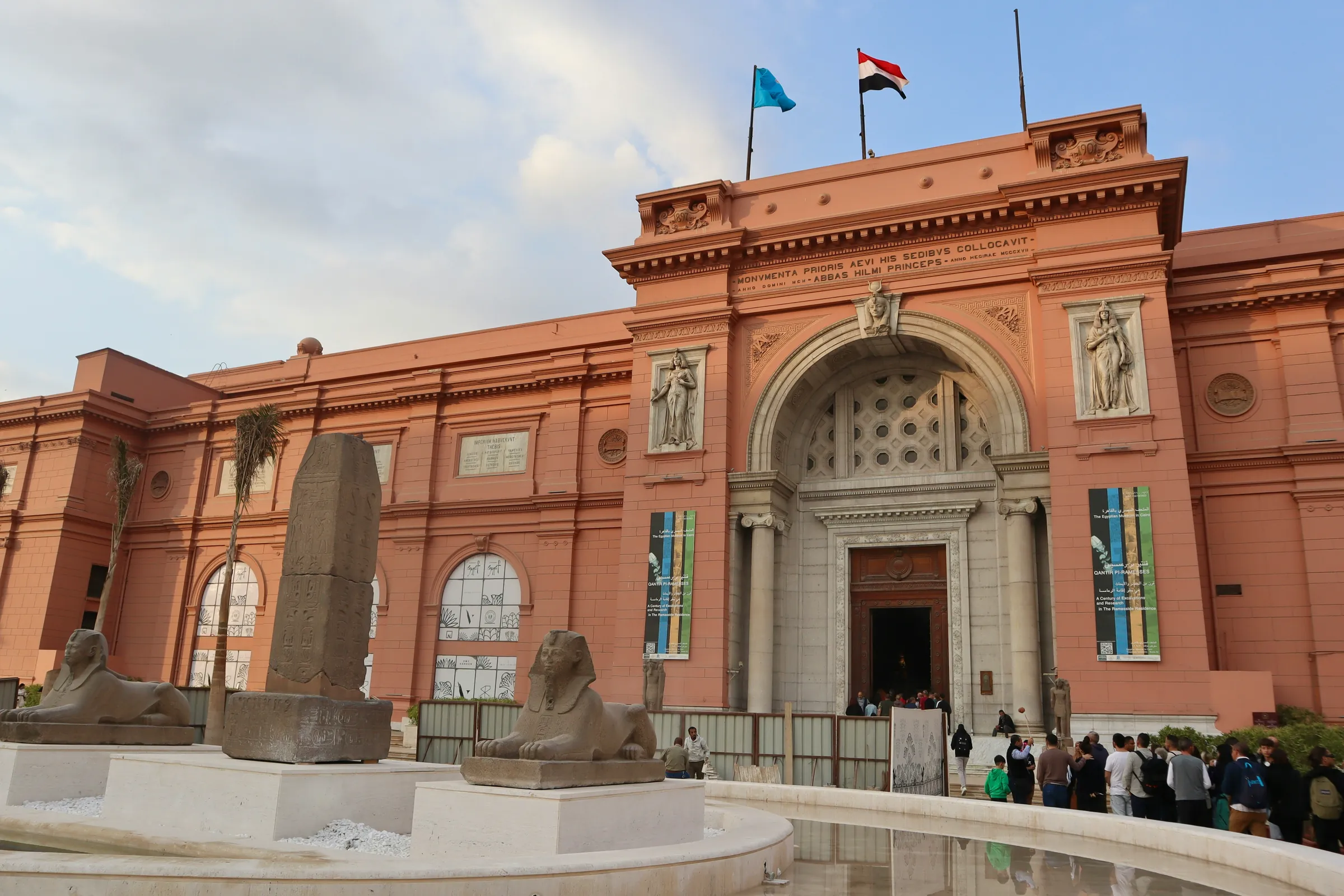
The Egyptian Museum building on Tahrir Square was officially opened on 15 November 1902. It was designed by the French architect Marcel Dourgnon and constructed by the Italian firm of Giuseppe Garozzo and Francesco Zaffrani, in a grand neoclassical style that gives the museum its distinctive salmon-pink facade. Purpose-built to house the national collection, it was the first national museum in the Middle East, with long, high central halls designed to display monumental Egyptian sculpture. Our concierge recommendation is to pause on arrival to take in the architecture, because the building is a historic monument in its own right and central to the museum's story. Standing on the northern side of Tahrir Square in downtown Cairo, the 1902 structure has now watched over the treasures of ancient Egypt for more than a century, and it remains a landmark of the city's downtown.
The design of the Egyptian Museum reflected the ambitions of its age: a monumental, purpose-built home worthy of the world's greatest collection of pharaonic antiquities. Marcel Dourgnon's neoclassical plan organised the museum across two floors, with the ground floor built to hold the larger stone objects and the upper floor the smaller treasures. The result was a museum whose architecture served its collection, framing colossal statues in halls scaled to match them. Our concierge recommendation is to notice how the building shapes the visit even today, guiding you from the monumental sculpture below to the jewellery and papyri above. Opened in 1902, the museum on Tahrir Square was a landmark achievement of early Egyptology, and its enduring design is one reason a visit feels like stepping into the very history of how the modern world came to study ancient Egypt.
How has the museum's collection changed over time?
The Egyptian Museum's collection has grown enormously since 1902, and it now numbers well over 100,000 objects spanning more than three thousand years of ancient Egyptian civilisation. For much of the 20th century it was the single home for Egypt's greatest treasures, including the artefacts from the tomb of Tutankhamun, discovered by Howard Carter in 1922, and a famous display of royal mummies. Our concierge recommendation for understanding the museum today is to see it as a living institution whose holdings have shifted as Cairo's museum landscape has expanded. What remains on Tahrir Square is still an unrivalled breadth of pharaonic art — colossal statues, jewellery, papyri and sarcophagi across two floors — even as some flagship collections move to Cairo's newer museums. The historic building continues to tell the story of more than a century of Egyptology.
In recent years, two major changes have reshaped what visitors find at the Egyptian Museum on Tahrir Square. In April 2021, twenty-two royal mummies were transferred to the National Museum of Egyptian Civilisation in Fustat during a ceremonial procession, and the flagship Tutankhamun treasures are being moved to the Grand Egyptian Museum at Giza, built to display the tomb's contents together. Our concierge recommendation is to confirm the current location of any specific object before planning a visit around it, since Cairo's collections are being redistributed among its three great museums. The historic museum retains its enormous breadth of pharaonic art and its landmark 1902 building, and remains the essential downtown stop — but the story of the collection is now shared across the city, a reflection of how Egypt's heritage is being presented for a new century.
Why does the museum's history matter to a visitor?
The history of the Egyptian Museum matters to a visitor because it shapes the whole character of the experience. Walking into the 1902 building on Tahrir Square, you enter the institution where the modern world first gathered and studied the pharaohs — the first national museum of the Middle East, founded on Auguste Mariette's 19th-century mission to keep Egypt's antiquities in Egypt. Our concierge recommendation is to let that history frame the visit: the grand neoclassical halls, the garden with Mariette's tomb, and the sense of more than a century of scholarship all add depth that a purely modern gallery cannot match. Understanding the museum's origins turns a walk past great statues into a walk through the story of Egyptology itself, from Boulaq on the Nile to the permanent home downtown that opened in 1902.
Knowing the museum's history also helps a visitor make sense of Cairo's three great museums and plan the right trip. The historic Egyptian Museum on Tahrir Square is the original, opened in 1902; the Grand Egyptian Museum at Giza is the vast modern showcase built to gather many of the greatest treasures; and the National Museum of Egyptian Civilisation in Fustat holds the Royal Mummies transferred in 2021. Our concierge recommendation is to see the historic museum as the birthplace of the collection and the newer museums as its expansion for a new era. That context explains why some famous objects have moved and why the Tahrir Square building remains an essential stop despite the changes. History, in this case, is not a footnote but the key to planning a rewarding visit to ancient Egypt in Cairo.
Frequently asked
When did the Egyptian Museum open?
The Egyptian Museum building on Tahrir Square officially opened on 15 November 1902. It was the first purpose-built national museum in the Middle East, designed to house the world's greatest collection of pharaonic antiquities across two floors in downtown Cairo.
Who founded the Egyptian Museum?
The French Egyptologist Auguste Mariette founded the collection, establishing a museum at Boulaq on the Nile in 1858 under a new Antiquities Department. He was later reburied in the museum garden, where his tomb can still be seen on Tahrir Square.
Who designed the 1902 museum building?
The French architect Marcel Dourgnon designed the neoclassical building, which was constructed by the Italian firm of Giuseppe Garozzo and Francesco Zaffrani. Its distinctive salmon-pink facade stands on the northern side of Tahrir Square in downtown Cairo.
Where was the collection before Tahrir Square?
It began at Boulaq on the Nile in 1858, then moved in 1889 to a former royal palace at Giza belonging to the Khedive Ismail, before its final move to the purpose-built museum on Tahrir Square, which opened in 1902.
Is the Egyptian Museum the first of its kind in the region?
It is regarded as the first national museum of the Middle East, opened in 1902. Its collection is one of the world's greatest gatherings of pharaonic antiquities, with well over 100,000 objects spanning more than three thousand years.
How large is the museum's collection?
The historic museum on Tahrir Square holds well over 100,000 objects across two floors, spanning more than three thousand years of ancient Egyptian civilisation — far more than anyone can see in a single visit, so focus on a few galleries.
Has the collection changed in recent years?
Yes. Twenty-two royal mummies moved to the National Museum of Egyptian Civilisation in 2021, and the flagship Tutankhamun treasures are being transferred to the Grand Egyptian Museum at Giza. Confirm the current location of any specific object when you plan.
Is the museum building itself historic?
Very much so. Opened in 1902 and designed by Marcel Dourgnon, the neoclassical building is a historic monument in its own right, with grand central halls built to display monumental sculpture. Its garden holds the tomb of founder Auguste Mariette.