 Skip-the-line available
 The Egyptian Museum vs the Grand Egyptian Museum
Tahrir Square's historic museum, the Grand Egyptian Museum at Giza and the National Museum of Egyptian Civilisation — how the three differ and which to visit.
Cairo now has three great museums of ancient Egypt, and travellers regularly confuse them. The historic Egyptian Museum on Tahrir Square, opened in 1902, is the original — and the one this ticket is for. The Grand Egyptian Museum (GEM) is a vast modern complex out at Giza, beside the pyramids, built as a new home for many of Egypt's greatest treasures. The National Museum of Egyptian Civilisation (NMEC), in Fustat, has housed the Royal Mummies since 2021. This guide explains how the three differ, what each holds, and which one you actually need, so you book the right ticket and plan the right trip across the city.
What is the historic Egyptian Museum on Tahrir Square?
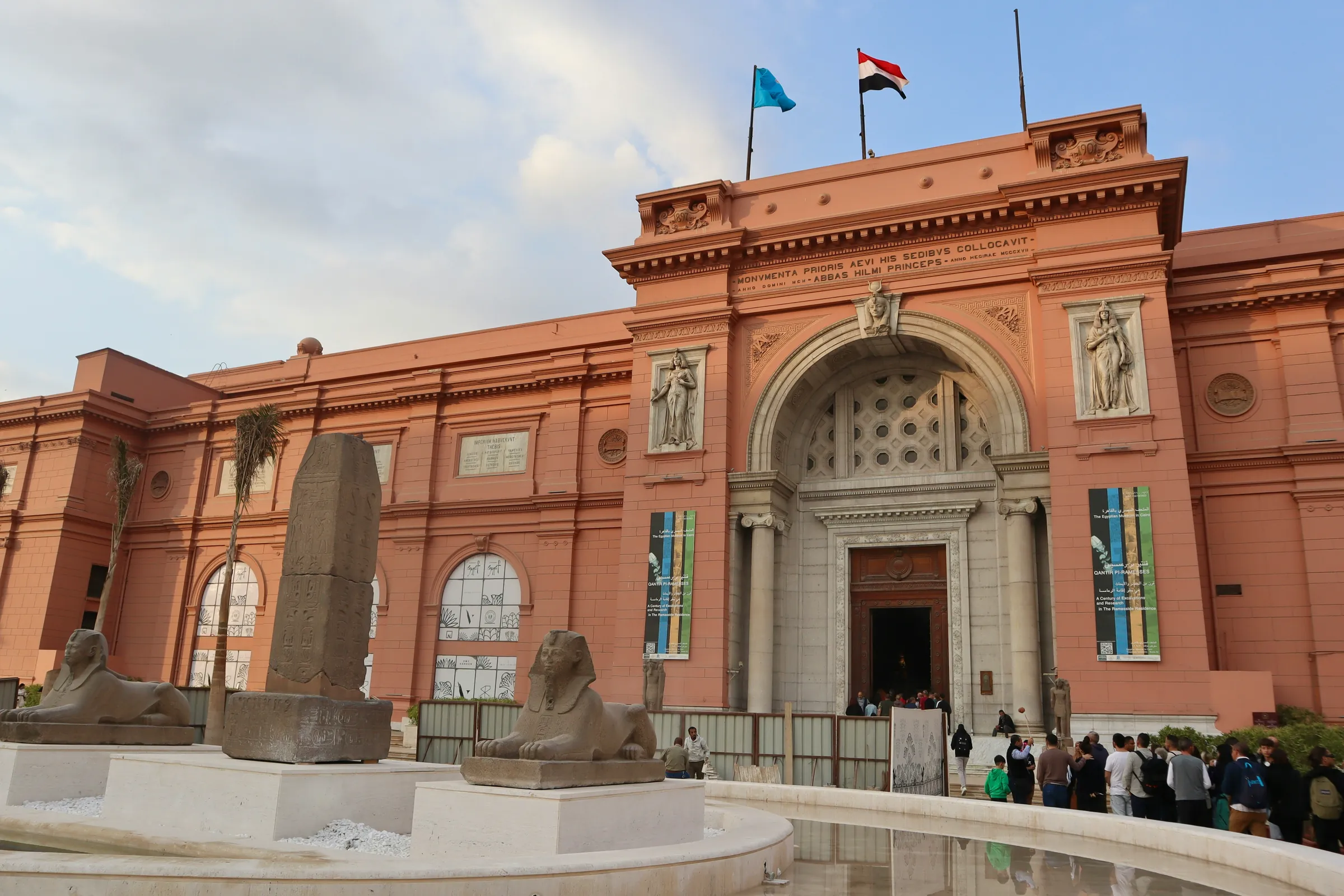
The Egyptian Museum on Tahrir Square is the original, opened on 15 November 1902 in a grand salmon-pink neoclassical building in the heart of downtown Cairo. For more than a century it has held one of the world's greatest collections of pharaonic antiquities — well over 100,000 objects across two floors — including colossal statues, royal jewellery, sarcophagi and papyri spanning more than three thousand years. Designed by the French architect Marcel Dourgnon, it was the first purpose-built national museum in the Middle East. This is the museum this ticket admits you to. Our concierge recommendation is to treat it as the essential historic stop in Cairo: central, deeply atmospheric, and rich in the sweep of ancient Egyptian art. It should not be confused with the Grand Egyptian Museum, a separate modern institution out at Giza beside the pyramids.
The great strengths of the historic museum are its central location — easy to reach by metro to Sadat station or by taxi, and naturally paired with downtown Cairo — and its sheer historical depth as the institution where the modern world first gathered and studied the pharaohs. The building itself, opened in 1902, is part of the experience, and its garden holds the tomb of Auguste Mariette, who founded the collection in the 19th century. Two important things have changed in recent years: the Royal Mummies moved to the National Museum of Egyptian Civilisation in 2021, and the flagship Tutankhamun treasures are being transferred to the Grand Egyptian Museum at Giza. Our concierge recommendation is to confirm current arrangements for any specific object, while relying on the museum's unmatched breadth of pharaonic art across its two floors.
What is the Grand Egyptian Museum at Giza?
The Grand Egyptian Museum (GEM) is an enormous, purpose-built modern museum out at Giza, beside the pyramids — a completely separate institution from the Tahrir Square museum, with its own collection, its own building and its own tickets. It was conceived as a vast new home for Egyptian antiquities, with sweeping contemporary galleries designed around the greatest treasures, and its location next to the Giza plateau makes it a natural pairing with the pyramids. Among the collections being brought together at GEM are the artefacts found in the tomb of Tutankhamun, gathered to be shown as a single display. Our concierge recommendation is clear: if your plan centres on the pyramids and a major modern museum on the same side of the city, GEM is the one beside them at Giza — but it is a separate visit with its own ticket, not the historic museum on Tahrir Square.
GEM and the historic Egyptian Museum are different museums, and a ticket for one does not admit you to the other, so it is essential to be sure which you are booking and which you intend to visit. The Grand Egyptian Museum sits at Giza, roughly 30 to 45 minutes across the city from Tahrir Square by car, depending on traffic. The historic museum, by contrast, is downtown, opened in 1902, and rich in more than a century of scholarship and monumental sculpture. Our concierge recommendation for travellers with time is to see both, since they tell complementary stories: the historic building on Tahrir Square as the birthplace of Egyptology's public collections, and GEM as the vast modern showcase beside the pyramids. If you can visit only one, choose according to whether you want historic atmosphere downtown or a modern museum next to Giza.
What is the National Museum of Egyptian Civilisation?
The National Museum of Egyptian Civilisation (NMEC), in the Fustat district of Old Cairo, is the third of the city's great museums and again entirely separate from the other two. Since April 2021 it has been the home of the Royal Mummies, twenty-two of which were transferred there from Tahrir Square in a ceremonial procession known as the Pharaohs' Golden Parade. Rather than focusing solely on the pharaonic age, NMEC presents the sweep of Egyptian civilisation across all its eras, from prehistory to the modern day. Our concierge recommendation is to think of NMEC as the place to see the mummies and the broad story of Egypt, distinct from the pharaonic art of the historic museum and the treasure-focused galleries of GEM. It has its own building, its own location in Fustat, and its own ticket, separate from the museum this ticket covers.
If seeing the Royal Mummies is a priority, NMEC in Fustat is where they now are — not the historic Egyptian Museum on Tahrir Square, and not the Grand Egyptian Museum at Giza. Each of Cairo's three museums has its own ticket and its own location across the city, so it pays to decide in advance which you want to visit and to plan the transfers between them. Our concierge recommendation for most first-time travellers is that the historic Egyptian Museum on Tahrir Square remains the essential downtown stop, with its unrivalled breadth of pharaonic art and its landmark 1902 building, while NMEC and GEM are rewarding additions for those with more time. Naming the specific museum clearly to any driver avoids the frequent confusion between the three, which lie in quite different parts of Cairo.
Which Cairo museum should I visit?
Which Cairo museum to visit depends on your interests and how much time you have. For most first-time travellers, the historic Egyptian Museum on Tahrir Square is the essential stop: central, atmospheric, opened in 1902, and rich in the sweep of pharaonic art across two floors. If your day is built around the Giza pyramids and you want a major modern museum beside them, the Grand Egyptian Museum is the natural companion out at Giza. If seeing the Royal Mummies matters most, the National Museum of Egyptian Civilisation in Fustat is where they now are. Our concierge recommendation is to match the museum to your priority — historic downtown collection, modern showcase by the pyramids, or the mummies and the broad story of Egypt — and to remember that each has its own separate ticket and location across the city.
Travellers with two or three days in Cairo can comfortably see more than one museum, since they tell complementary stories. A well-balanced plan pairs the historic Egyptian Museum on Tahrir Square with the Giza pyramids and the Grand Egyptian Museum on one side of the city, and keeps the National Museum of Egyptian Civilisation in Fustat for another day. Our concierge recommendation is to space the museums out rather than attempting all three in a single day, because each is substantial and the transfers across Cairo take time — the historic museum downtown and GEM at Giza are roughly 30 to 45 minutes apart by car. Whichever you choose, be sure your ticket matches the museum you intend to enter: this ticket is for the historic Egyptian Museum on Tahrir Square, not GEM at Giza or NMEC in Fustat.
Where are the treasures of Tutankhamun now?
The treasures of Tutankhamun are being brought together at the Grand Egyptian Museum (GEM) at Giza, which was built in part to display the complete contents of the tomb as a single collection. Discovered largely intact by Howard Carter in 1922 in the Valley of the Kings, the burial of the boy king is the only near-complete royal tomb ever found, and its thousands of objects — including the famous solid-gold funerary mask — form one of the greatest archaeological finds in history. For much of the 20th century these treasures were the centrepiece of the historic museum on Tahrir Square. Our concierge recommendation is to confirm the current arrangements for the Tutankhamun galleries when you plan, since the flagship collection is being transferred to GEM at Giza rather than remaining downtown. The two museums lie roughly 30 to 45 minutes apart across Cairo, so it pays to check where the Tutankhamun material is displayed before you book.
For travellers, the practical point is to check which museum currently displays the Tutankhamun material before building a day around it, because the collection has been moving from the historic Egyptian Museum on Tahrir Square to the Grand Egyptian Museum at Giza. The two museums lie roughly 30 to 45 minutes apart across the city, and each has its own separate ticket, so it matters which one you book. Our concierge recommendation is that if seeing Tutankhamun's artefacts is the main goal of your Cairo trip, the Grand Egyptian Museum beside the pyramids is where they are being gathered — while the historic museum on Tahrir Square remains the essential stop for the wider sweep of pharaonic art. Our concierge team can confirm the current display arrangements for you before you travel, so you plan the right visit.
Frequently asked
What is the difference between the Egyptian Museum and the Grand Egyptian Museum?
The Egyptian Museum on Tahrir Square is the historic 1902 museum in downtown Cairo. The Grand Egyptian Museum (GEM) is a separate modern museum out at Giza, beside the pyramids, with its own building, collection and tickets. The two lie about 30 to 45 minutes apart.
Which museum is this ticket for?
The historic Egyptian Museum on Tahrir Square in downtown Cairo, opened in 1902 — not the Grand Egyptian Museum at Giza and not the National Museum of Egyptian Civilisation in Fustat. A ticket for one does not admit you to the others.
Where are the Royal Mummies now?
At the National Museum of Egyptian Civilisation (NMEC) in Fustat, where twenty-two of them were transferred from Tahrir Square in April 2021. They are no longer shown at the historic Egyptian Museum or at the Grand Egyptian Museum.
Where are the treasures of Tutankhamun now?
The Tutankhamun treasures are being brought together at the Grand Egyptian Museum (GEM) at Giza, built to display the tomb's contents as one collection. Confirm current arrangements when you plan, as the flagship collection is moving to GEM from the Tahrir Square museum.
Should I visit the Tahrir Square museum or GEM?
For most first-time visitors the historic museum on Tahrir Square is the essential downtown stop, with its sweep of pharaonic art and its 1902 building. GEM, beside the pyramids at Giza, is a separate visit with its own ticket. Travellers with time see both.
Are the three museums far apart?
Yes — they are in different parts of Cairo. The Tahrir Square museum is downtown; GEM is out at Giza, about 30 to 45 minutes away; NMEC is in Fustat in Old Cairo. Each has its own ticket and location, so plan which you want to visit.
Can I see all three museums in one day?
It is not recommended. Each is substantial and the transfers across Cairo take time. A better plan pairs the historic museum with the Giza pyramids and GEM on one side of the city, keeping NMEC in Fustat for another day.
What is the National Museum of Egyptian Civilisation?
NMEC, in Fustat in Old Cairo, presents the whole sweep of Egyptian civilisation from prehistory to today, and has housed the Royal Mummies since 2021. It is separate from the historic museum on Tahrir Square and from GEM at Giza, with its own ticket.